TheLitPerspective is your one-stop shop for everything that ignites the spark of curiosity within you.

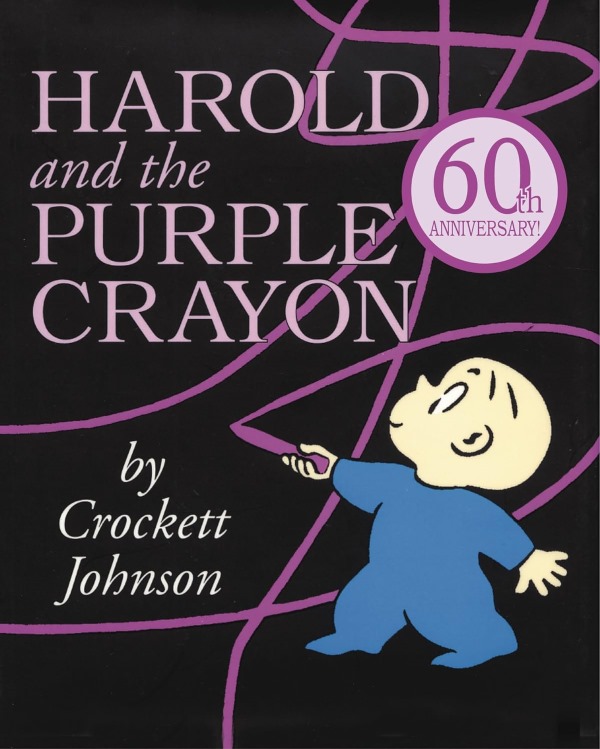
Harold and the Purple Crayon Series: An In-Depth Exploration
 Written by:TheLitPerspective
The Harold and the Purple Crayon series by Crockett Johnson is a timeless classic that has inspired generations of young readers. First published in 1955, the book tells the story of a young boy named Harold who embarks on extraordinary adventures with the help of a single purple crayon.
This magical crayon allows him to draw anything he imagines, turning blank pages into boundless worlds filled with his own creations. For almost seven decades, Harold’s simple but powerful story has sparked the imaginations of children, teaching valuable lessons about creativity, curiosity, and self-reliance.
But what is it about Harold and his purple crayon that has made the series so impactful?
So, let’s get started to see Harold and the Purple Crayon Series. What you’ll learn in this blog is:
The Origins of Harold and the Purple Crayon
Harold and the Purple Crayon was created by Crockett Johnson, a talented author and illustrator with a gift for capturing complex ideas through simplicity. The book, published by Harper & Brothers in 1955, emerged in a time when children’s literature was exploring new ways to encourage imagination and self-expression.
Johnson’s inspiration for the book remains partly a mystery, but his background as a cartoonist likely influenced his unique visual storytelling style. By combining a minimalist narrative with illustrations that reflected a child’s perspective, Johnson crafted a story that was simple yet deeply profound.
This little book, though unassuming, was ahead of its time in both format and message. It invited children to think creatively and encouraged them to see themselves as capable of shaping their own experiences—a radical idea in an era when children’s literature was often more prescriptive than participatory.
Summary of the First Book
In Harold and the Purple Crayon, readers meet Harold, a young boy with a seemingly magical crayon. Harold decides to go on a walk in the moonlight, so he draws a moon and a path. From there, he creates his surroundings, adding everything from an apple tree to a dragon, an ocean, and a mountain.
His drawings reflect his spontaneous ideas and playful curiosity, giving shape to a world of his own making. As he encounters obstacles, he draws his way out, illustrating a powerful message about self-reliance and adaptability.
The plot is straightforward, but the simplicity allows readers to focus on Harold’s creative solutions. The crayon, more than a drawing tool, becomes a symbol of imagination’s power.
Every line he draws is an extension of his thoughts and wishes, enabling him to overcome obstacles, seek adventure, and return safely home when he’s ready. This open-ended journey taps into the universal experience of childhood exploration and the freedom to dream without limits.
Themes in Harold and the Purple Crayon
The series is rich with themes that resonate with both children and adults:
- Imagination and Creativity: Harold’s crayon is the ultimate tool of creativity, giving him control over his surroundings. Each stroke of the crayon represents Harold’s power to shape his reality, a metaphor that encourages readers to see imagination as a limitless resource.
- Self-Discovery and Problem-Solving: Harold encounters numerous obstacles, from towering mountains to deep seas, and finds clever ways to overcome them. This teaches young readers about resilience and the importance of creative thinking in facing challenges.
- Curiosity and Bravery: Harold’s journey stems from his curiosity about the world. His bravery in navigating unknown landscapes speaks to the natural courage of children as they explore their surroundings. The book gently encourages readers to embrace new experiences, even if they seem daunting.
These themes are woven seamlessly into the narrative, providing subtle lessons on independence and self-confidence that are essential for young minds.
Character Analysis of Harold
Harold is a unique protagonist in children’s literature. He’s neither a hero nor a typical adventurer; instead, he is a curious, imaginative child who feels instantly relatable. Harold’s defining traits—imagination, curiosity, and problem-solving—make him a beloved character for readers of all ages. He is a reflection of the audience itself: eager to explore, quick to adapt, and unafraid of making mistakes along the way.
His character represents the boundless potential children possess. With his purple crayon, he exercises control over his environment, embodying the idea that imagination can be a powerful tool for self-expression and exploration. Harold’s quiet confidence and resourcefulness invite readers to see themselves as capable and creative, reinforcing that they too can navigate life’s twists and turns with the right tools and mindset.
The Significance of the Purple Crayon
The purple crayon is far more than a simple art supply; it serves as Harold’s lifeline and his most important tool. It allows him to build the world he wants to explore, acting as a bridge between his imagination and reality. The choice of a single color also emphasizes the simplicity and boundless nature of creativity—Harold doesn’t need a full palette to create his universe; he only needs his imagination.
This iconic crayon becomes a metaphor for agency and autonomy. By drawing his path, Harold demonstrates how one’s perspective can transform any situation. The crayon gives him the power to solve problems on his own terms, fostering a sense of empowerment. Its role in the story underscores a valuable lesson for readers: even the simplest tools, when paired with creativity, can unlock infinite possibilities.
Illustrative Style of Crockett Johnson
Johnson’s illustrative style in Harold and the Purple Crayon is minimalistic but deeply expressive. He uses simple, clean lines and largely empty backgrounds, which allow readers to focus on Harold’s creations. The blank pages act like a canvas, inviting readers to imagine alongside Harold as he draws. Johnson’s art echoes the perspective of a young child, whose imagination fills the gaps in their world.
The minimalist approach heightens the sense of wonder in Harold’s journey. By leaving much of the page blank, Johnson invites readers to participate actively in the story, filling the white space with their own ideas and interpretations. This artistic choice is a brilliant strategy that enhances the book’s open-ended quality, reinforcing that imagination is boundless and accessible to everyone.
The Sequels in the Harold and the Purple Crayon Series
The original story of Harold and the Purple Crayon was followed by several sequels, including Harold’s Fairy Tale, Harold’s Trip to the Sky, and Harold’s Circus. Each book offers a new adventure, but all retain the same thematic elements and illustrative style. The sequels see Harold navigating new settings and facing different challenges, which allow his character to grow while introducing readers to fresh, imaginative scenarios.
In Harold’s Fairy Tale, for example, he ventures into a fantastical land, creating castles and landscapes with his crayon. In Harold’s Trip to the Sky, he embarks on a celestial journey, exploring the cosmos. Each installment explores a new theme or challenge but retains the essence of Harold’s resourceful and creative spirit. These sequels build upon the first book, creating a cohesive series that stays true to its original message while expanding Harold’s world.
How the Series Develops Harold’s Character
Throughout the Harold and the Purple Crayon series, readers witness Harold’s character grow in subtle yet impactful ways. While he remains the same curious, creative child, each new adventure adds layers to his personality, showing different facets of his imagination and problem-solving skills.
For instance, in Harold’s Circus, Harold takes on the role of a performer, creating an entire circus to entertain himself, which reflects his adaptability and inventiveness. This setting allows Harold to experience a new aspect of creativity by imagining diverse acts and performances.
In Harold’s Trip to the Sky, he explores the vastness of space, tackling themes of discovery and the unknown. Here, Harold displays bravery as he travels into uncharted territory, embodying the curiosity that drives his adventures.
By confronting various challenges and continually inventing creative solutions, Harold grows increasingly confident in his abilities. These sequels build a richer character profile for Harold, transforming him from a curious child with a crayon into a young explorer capable of imagining and confronting diverse worlds.
The Legacy of Crockett Johnson
Crockett Johnson, born David Johnson Leisk, is celebrated not only for the Harold and the Purple Crayon series but also for his contributions to children’s literature and comic art. Before creating Harold, Johnson was known for his comic strip Barnaby, which displayed his characteristic wit and simplicity.
Johnson’s unique ability to blend humor, imagination, and minimalism set him apart as an illustrator, influencing a generation of children’s authors and illustrators who would follow.
Johnson’s contributions extend beyond Harold, as he was also a political cartoonist and wrote works exploring mathematics in visual art. His books on mathematical concepts, such as The Probability of Frost, show his diverse interests and his knack for distilling complex ideas into engaging narratives.
His legacy in children’s literature is undeniable—authors like Maurice Sendak and Shel Silverstein have cited him as an influence, and his ability to convey profound ideas through simplicity has impacted storytelling styles in both books and children’s programming for decades.
Educational Value of Harold and the Purple Crayon
The Harold and the Purple Crayon series holds valuable lessons that extend beyond the pages of the books. Educators and parents recognize the series as a powerful tool for teaching critical thinking and creativity. Here are a few ways the series can be used educationally:
- Problem-Solving and Critical Thinking: Harold’s adventures model effective problem-solving strategies as he encounters obstacles and uses his imagination to overcome them. Children learn the importance of thinking outside the box and coming up with solutions that might not be obvious at first glance.
- Independence and Self-Reliance: Harold’s journey is a solo adventure, emphasizing the importance of independence. He teaches young readers that they are capable of creating their own paths and handling challenges without always relying on others.
- Storytelling and Language Skills: By discussing Harold’s actions and drawing ideas from the book, children can improve their storytelling abilities. Educators can encourage students to narrate their own adventures or to create alternate endings, fostering their language and communication skills.
The open-ended nature of Harold’s world invites young readers to engage actively with the story, which helps develop cognitive skills like visualization and narrative comprehension.
Cultural Impact and Adaptations
The Harold and the Purple Crayon series has left an indelible mark on popular culture, inspiring numerous adaptations across various media. The series has been adapted into animated shorts, television episodes, and even stage productions, each version introducing Harold’s world to new audiences.
The book’s simplicity and focus on imagination make it a natural fit for different forms of storytelling, and its themes have been woven into educational content, furthering its reach.
In 2001, HBO Family adapted Harold and the Purple Crayon into a series of animated shorts that captured the book’s whimsical spirit while adding new elements to Harold’s adventures. These adaptations helped reintroduce the character to a younger audience, reinforcing the timelessness of Johnson’s creation.
Theater productions and interactive exhibits have also brought Harold’s story to life, allowing children to engage physically with the narrative by drawing their own “purple crayon” worlds.
Beyond adaptations, Harold’s influence can be seen in modern children’s literature and media that celebrate creativity and the power of imagination. Characters who actively shape their world, like Harold, have become a staple in children’s stories, demonstrating his enduring influence on the genre.
Psychological Perspectives on the Story
From a psychological perspective, Harold and the Purple Crayon offers valuable insights into child development. The story aligns with developmental theories about autonomy and imagination, specifically those proposed by psychologists like Jean Piaget and Erik Erikson.
According to Piaget’s theory of cognitive development, young children are naturally imaginative and see their surroundings as mutable and subject to change based on their thoughts. Harold’s adventures reflect this stage perfectly, as he transforms his world at will, mirroring a child’s capacity for imaginative play.
Erikson’s stages of psychosocial development also come into play, particularly his concept of autonomy versus shame and doubt. Harold’s journey is a metaphor for a child’s burgeoning sense of independence.
His self-driven exploration and ability to navigate challenges with his crayon illustrate a healthy development of autonomy. Additionally, the act of drawing his world aligns with research suggesting that imaginative play helps children process emotions, solve problems, and build confidence. By controlling his environment, Harold is able to tackle fear and curiosity on his own terms, a crucial aspect of growing up.
How Parents and Teachers Can Use the Series
Parents and educators can leverage Harold and the Purple Crayon to foster creativity, critical thinking, and independent play in children. Here are a few ways to incorporate the series into educational or home activities:
- Imaginative Drawing Exercises: Encourage children to create their own “Harold-style” adventures by drawing scenes and scenarios they’d like to explore. This exercise can help develop fine motor skills, spatial reasoning, and storytelling abilities.
- Problem-Solving Scenarios: Use Harold’s challenges as examples for problem-solving discussions. Pose questions like, “How would you solve this problem?” or “What would you draw to help Harold in this situation?” These conversations promote critical thinking and help children develop a toolkit for handling real-life obstacles.
- Exploring Cause and Effect: Harold’s actions have direct consequences—when he draws a dragon, it’s too scary, so he needs to create something safer. Discussing cause and effect through Harold’s story helps children understand the impact of their actions and choices.
- Story Sequencing Activities: Harold’s journey follows a sequence that’s easy for children to retell or reconstruct. Ask kids to retell or rearrange Harold’s story, enhancing their understanding of narrative flow and structure.
By actively engaging with Harold’s story, children can not only enjoy the adventure but also develop essential life skills in a creative and supportive way.
Comparisons to Other Children’s Literature
Harold and the Purple Crayon is often compared to other classic works that encourage imagination and exploration, such as Maurice Sendak’s Where the Wild Things Are. Both stories share a protagonist who ventures into a world of their own making, embodying themes of independence and creativity.
However, while Where the Wild Things Are focuses on emotional exploration and confronting one’s fears, Harold and the Purple Crayon is more centered on creative agency and problem-solving.
Similarly, books like The Snowy Day by Ezra Jack Keats capture a similar sense of childlike wonder, though they focus more on observational exploration than active creation. Harold stands out in this context because he is not just observing or participating in a world, but actively creating it. This level of agency is what makes the series distinct, as it positions Harold as both a participant and a creator within his adventures.
Why Harold and the Purple Crayon Remains Relevant
One reason Harold and the Purple Crayon has endured for so many years is its timeless exploration of themes like creativity, independence, and exploration. In an age where children are surrounded by structured activities and digital screens, Harold’s journey reminds us of the importance of free play and the power of a simple tool to unlock imagination. The series encourages young readers to think independently, dream boldly, and face challenges with a creative mindset—values that resonate across generations.
The simplicity of the story allows readers to project their own experiences onto Harold’s world, creating a personal connection with his character. This universal appeal is a testament to Johnson’s skill as a storyteller and his understanding of the child’s mind. As long as children have imaginations and the desire to explore, Harold and the Purple Crayon will continue to find a place in their hearts.
TakeAways
Harold and the Purple Crayon is a beloved series that celebrates the boundless power of imagination. Crockett Johnson’s creation is more than a story; it’s an invitation for young readers to see the world as a canvas for their own ideas.
Through Harold’s adventures, children learn that they hold the crayon to their own lives, capable of drawing new paths, discovering solutions, and embracing curiosity. The book’s legacy as a cornerstone of children’s literature speaks to its profound simplicity and its enduring message that the only limits are the ones we draw for ourselves.
FAQs
1. What age group is Harold and the Purple Crayon suitable for?
- The series is generally suitable for children ages 3 to 7. Its simple language and illustrations make it ideal for early readers, while its deeper themes can be appreciated by older children as well.
2. Why is the crayon purple in Harold and the Purple Crayon?
- The choice of purple is never explained explicitly, but it stands out on the page and represents creativity and uniqueness, making Harold’s adventures more memorable and visually engaging.
3. Are there other books similar to Harold and the Purple Crayon?
- Yes, books like Where the Wild Things Are by Maurice Sendak and The Snowy Day by Ezra Jack Keats share similar themes of exploration, imagination, and childlike wonder.
4. Has Harold and the Purple Crayon been adapted into other media?
- Yes, the series has been adapted into animated shorts, a television series, and even theater productions, allowing new generations to experience Harold’s story in various formats.
5. What lessons can children learn from Harold and the Purple Crayon?
- Children can learn about creativity, independence, problem-solving, and the value of imagination. Harold’s journey encourages readers to explore, take risks, and think creatively when facing challenges.
Book Series to Read on
Please follow and like us:
 0
0
 20
20
 20
20TheLitPerspective is your one-stop shop for everything that ignites the spark of curiosity within you.